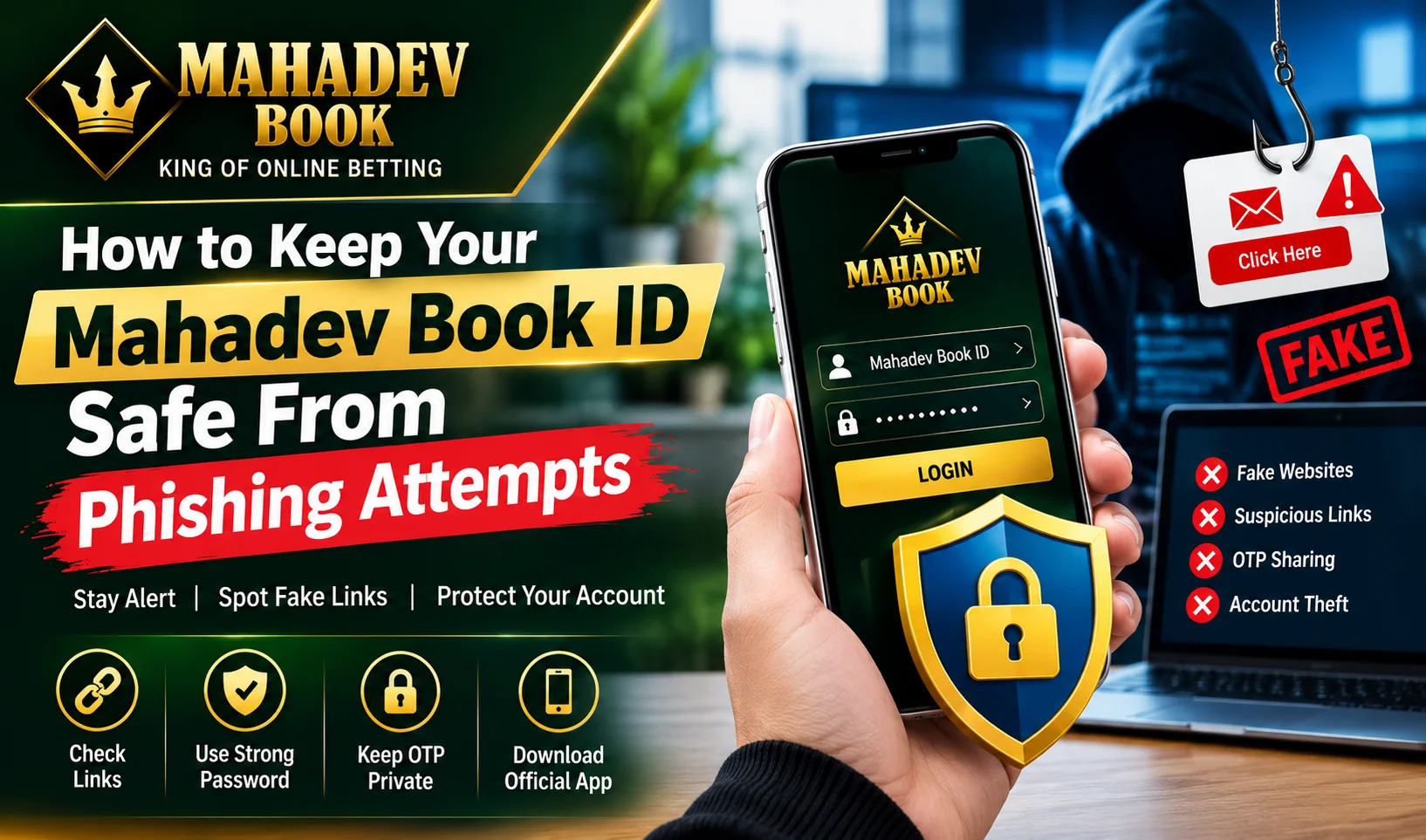
Phishing is one of the widespread problems of online security that can impact individuals utilizing sites, cell applications, email administrations and other computerized administrations. Malicious persons also create fake messages or web pages that appear to be legitimate and try to gather your password, OTP’s, username or mahadev book id and any other private information.
With Mahadev Book, the security of the account is crucial in responsible internet use. Users should know how to recognize suspicious links, check websites, safeguard their passwords, and never give out their mahadev book id or other personal information on their accounts.
This guide will tell you some practical tips on how to identify and prevent phishing attempts and how to keep your information, such as your mahadev book id, out of the hands of unauthorized users.
What Is Phishing?
Phishing is a fraud, typically by email, in which a fraudster pretends to be a well-known service or person. Typically, the attacker attempts to trick the victim into clicking on a link, opening an attachment, installing an application or entering personal information on a bogus website.
A phishing email can be sent as:
- A security warning
- A password-reset notification
- An account-verification request
- A customer-support message
- A special offer
- This is a warning that there needs to be an urgent login.
It may seem official, but its appearances can’t be the sole indicators of authenticity.
Why Phishing Can Be Dangerous
If a phishing attempt is successful, it will reveal information like OTPs, passwords, recovery information, email credentials, or username.
One of the most critical security practices is to not click on any login links that are unexpected when using the mahadev book login. Rather, start the browser or the application by itself and go to the trusted service source.
Always look for unfamiliar branding, as that is not proof of authenticity.
1. Check the Website Address

Look for the URL of any site before you put in your information.
Fake websites can have addresses that look similar to the addresses of real websites. They can include misspelled domain names, out-of-word extensions, non-standard domain extensions, or entirely different domain names.
Before you use mahadev book login, be sure to verify the address and ensure that you are at the correct web site.
Look for:
- Correct spelling
- Expected domain
- Secure HTTPS connection
- No suspicious extra characters
- No unfamiliar redirects
If the address is unusual, close the page, do not enter your information.
2. Do Not Trust Unexpected Links
Phishing messages will make it seem urgent to take action.
The message could say:
- Your account will be suspended.
- Your password has expired.
- Verification is required.
- Unusual activity is detected on your account.
- Identification will need to be verified at once.
A message that needs to be acted on promptly should not be the basis for a hasty decision.
If you get any suspicious mail about Mahadev Book, don’t click on its link. Self navigate to service & verify if the stated problem is real or not.
3. Keep Your Account ID Private
Do not make your account identifier publicly available.
Avoid posting your mahadev book id on social-media comments, groups, forums, and unknown websites.
It’s also best not to give your mahadev book id to anyone else along with your password or OTP.
Limiting access to account information decreases the amount of information available to potential scammers.
4. Never Share Your OTP
An OTP is a code to confirm access to an account. This should be regarded as confidential information.
Don’t blindly accept any request from someone asking for an OTP to log in, verify, reset password or recover an account.
Don’t share OTPs via:
- Telegram
- Social media
- Unknown support chats
An individual who knows your username but hasn’t received your OTP can try to get it by using social engineering methods.
5. Be Careful With Customer-Support Messages
Scammers may pretend to be customer-support representatives.
They can assure you that they can assist with:
- Login problems
- Password recovery
- Account verification
- Technical errors
- Account unlocking
Then they will request your password, OTP, screenshots or remote access to the device.
The confidential information should not be provided for reasons of being perceived as representing Mahadev Book by another party. Locate the official support channel and check before you reply.
6. Use a Strong Password
Another good security measure is to have a strong password.
Don’t use words that are easily guessed, such as:
- Your name
- Birthday
- Mobile number
- Simple number combinations
- Common words
NEVER have the same password on more than one site.
If the password used for one service is compromised, it is possible that the same password is used for other services.
Utilize an account manager to create and keep hard-to-remember passwords.
7. Protect Your mahadev book id
Security of an account isn’t just about remembering a password.
Don’t share your mahadev book with strangers. When sending screenshots, avoid providing any information about your accounts unless there is a valid and verified reason.
If you see any activity you don’t expect, use the verified recovery process to change your password, and check the security options.
8. Be Careful With mahadev book app Downloads
When looking for a mahadev book app, users should be cautious of the source before downloading any applications.
Avoid downloading APKs from untrustworthy websites or PM links.
Before installing a mahadev book app, you should look for the following things:
- Application source
- Publisher information
- Requested permissions
- Reviews
- Update history
- Whether the source can be independently verified
Unrecognized or changed apps may pose extra security threats.
9. Avoid Suspicious mahadev book app Files
An installer-type file might have something more than what has been expected.
Avoid installing applications just on the grounds that they are sent through a messaging service and that they are a new version of the mahadev book application.
If the sender requests you install the file ASAP to gain access to your account, be especially careful.
If an application source cannot be determined, it is better to avoid installing the application.
10. Check Your Device Security
Another key component of account security is your phone or computer.
Update the operating system, browser and installed applications.
You should also:
- Use a device lock
- Remove applications you do not need
- Review application permissions
- Avoid unknown downloads
- Avoid logging into sensitive accounts on shared computers
These habits can reduce exposure to common digital-security threats.
11. Be Careful When Using mahadev book login
Before entering credentials through mahadev book login, take a moment to check the page.
Do not enter your password if:
- The page opened from an unexpected message.
- The URL looks unfamiliar.
- The website redirects repeatedly.
- The page asks for unnecessary information.
- The browser displays a security warning.
If something seems unusual, close the page and access the service through a verified route instead.
12. What If You Click a Phishing Link?
Just because you’ve clicked on an unfriendly link, doesn’t mean your account is hacked.
If you have come from the link and you have not filled in any details or downloaded anything, close the page and do not interact with it any more.
If you did enter your password, don’t hesitate to take action right away.
Use the confirmed recovery process to change the impacted password. If you have the same password on other accounts, update those passwords, too.
If you downloaded an application or file you didn’t recognize, you may want to uninstalls it and run a security check.
13. What If You Shared Your mahadev book id?
If you accidentally shared your mahadev book id, do not panic.
An account ID by itself is not the same as sharing a password or OTP. However, you should avoid sharing additional information with the same person.
Never provide your password, OTP, recovery code, or other authentication information to someone simply because they already know your account ID.
If you suspect suspicious activity, use the verified account-security process.
14. Avoid Fake Password-Reset Pages
Don’t assume that a message can be entirely “hack-proof” with a special app, code or service.
There is no single security measure that can remove all potential risks.
Strong account security is the result of a number of good practices:
Secure device + verified website + phishing awareness + strong password + private credentials.
Security Checklist for New Users
Before signing in, ask yourself:
- Did I open the website myself?
- Is the website address correct?
- Am I using a secure personal device?
- Is my password unique?
- Am I being asked for an OTP unexpectedly?
- Is someone pressuring me to act quickly?
- Did I download the application from a verifiable source?
- Am I sharing more information than necessary?
If you are uncertain about any of these questions, stop and verify the situation before continuing.
Frequently Asked Questions
How can I protect my Mahadev Book account from phishing?
Install a secure password, check the website URL, do not click on links that you did not expect, do not share OTPs, only use application sources you can trust.
Should I click a link sent for mahadev book login?
Don’t follow links to websites that you didn’t expect. Rather, use the browser or application to open and then go to the verified service source.
Can I share my mahadev book id with someone?
Best not to post your account ID, or give it to unknown people. Do not share it with another person or their OTP.
How can I safely install a mahadev book app?
Check publisher and source of application before installing. Do not download and install APK files or installers from unknown messages.
What should I do after entering my password on a phishing website?
Update the compromised password as soon as possible via the legitimate account-recovery process. If that password was used on other services, change it on those services, as well.
Should I give an OTP to someone claiming to be support?
No. Do not consider OTPs/verification codes as confidential authentication information.
Final Thoughts
Phishing attacks are frequently based on social engineering, mimicry and urgency, rather than on complex technology. You can make a difference for your online security if you know what to look out for in suspicious messages and what to look for before putting your credentials into a website.
Use a strong password for your mahadev book id, don’t share with strangers or use an authentication code. If you are using a book app like mahadev, check the source of the app before installing and do not install modified or unfamiliar APK files.
On mahadev book login, check the website address for a few seconds and ensure that you’re using the intended source. Verification is a part of the normal process of signing in, and maintaining good security habits is easier.