
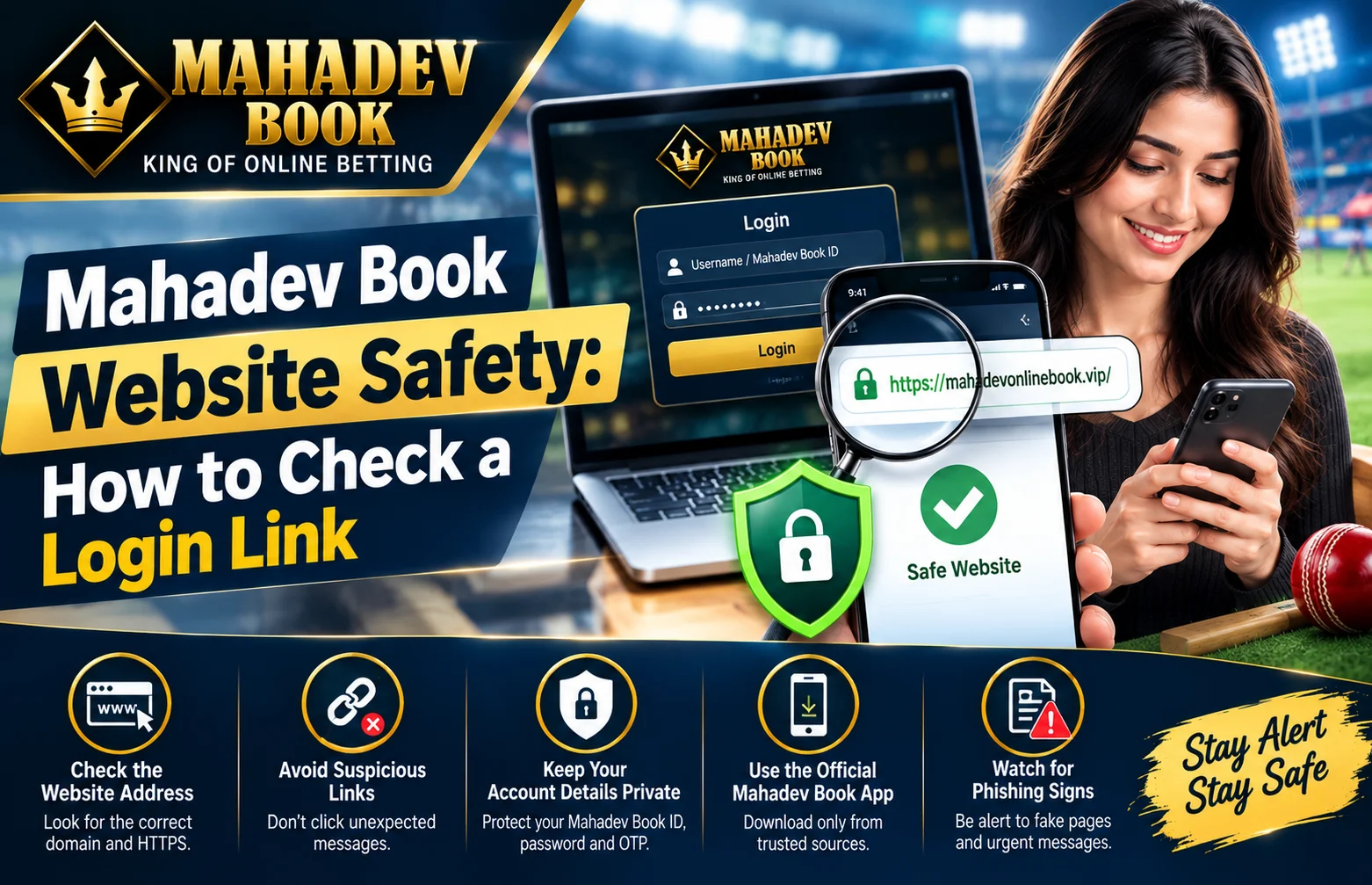
One way to protect yourself online is by verifying a web site address before putting in personal information. Scam sites mimic the look of a legitimate site in an attempt to get you to submit passwords, codes or other private information.
When looking for Mahadev Book, users should learn how to spot suspicious sites, check URLs and look for common phishing schemes. Authenticity does not guarantee a website based on a recognizable or professional design.
This article helps you to learn how to check the authenticity of login links, how to avoid falling for a fraudulent page, and to enhance the security of your online accounts.
Why Is Website Verification Important?
A login page is a page that users will have to log in to get access to an online account. When the page is a scam, the information that is uploaded can be stolen and used inappropriately.
Fraudulent sites can mimic legitimate sites, using the same branding, colors, page layouts and forms for logging in. There are even individuals who use domain names that are only one or two characters away from well-known names.
Always double check the web address and ensure that it is legitimate before using mahadev book login. Just a few seconds to look at a URL can mean the difference between falling for a common online scam and avoiding it.
1. Inspect the Complete Website URL
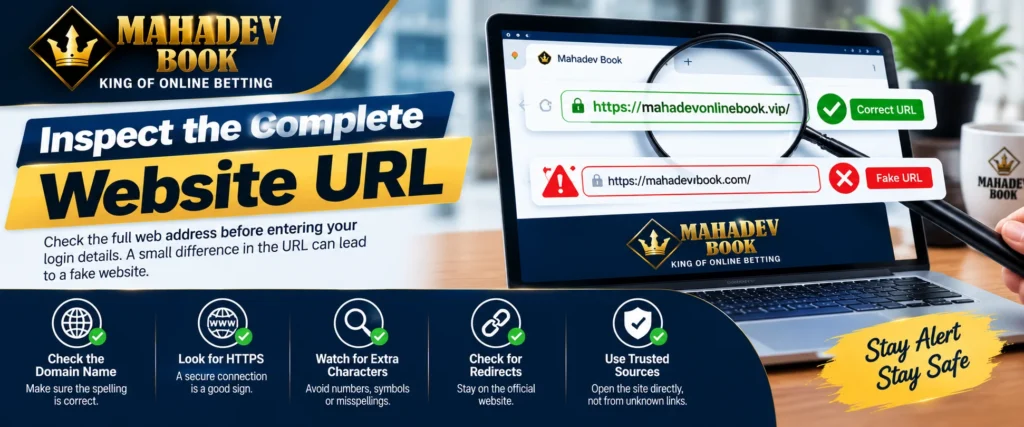
The first one is to take a look at the complete website address instead of its appearance on the page.
Scammers may register a web domain with misspelled words, extra characters, strange extensions, or combinations of words.
Consider the following to identify suspicious login links when checking:
- Incorrect spelling in the domain name
- Extra letters or numbers
- Unfamiliar domain extensions
- Unexpected subdomains
- Repeated redirects to other websites
- URLs that differ from the address you intended to visit
If anything looks unusual, do not enter your password or personal information.
2. Verify the Source of Every Login Link
Login links may arrive through emails, text messages, social-media posts, advertisements, or private messaging applications.
A suspicious message might claim that your account requires immediate verification or that access will be blocked unless you sign in quickly.
Avoid clicking unexpected links, particularly when the sender creates pressure to act immediately.
Instead, open your browser independently and verify the website through a source you can confirm. When using mahadev book login, do not rely solely on a link supplied by an unknown contact.
3. Understand HTTPS and Website Security
HTTPS encrypts the connection between your browser and a website. You can usually identify it by the prefix in the URL.
However, HTTPS does not prove that a website is genuine. Fraudulent websites can also use encrypted connections.
For this reason, examine the domain name as well as the connection. A secure connection cannot protect you from voluntarily submitting your credentials to a fraudulent website.
Never treat a padlock symbol alone as proof that a page is trustworthy.
4. Recognize Common Phishing Techniques
Phishing messages are designed to encourage users to take actions that may expose confidential information.
Common examples include fake security warnings, password-reset notifications, account-verification requests, and messages promising special access.
Watch for these warning signs:
- Threats of immediate account suspension
- Unexpected password-reset requests
- Requests for passwords or OTPs
- Unfamiliar application downloads
- Unusual website redirects
- Promises of guaranteed account recovery
If a message seems suspicious, stop interacting with it and verify the claim independently.
5. Keep Your Account Information Private
Your book id (mahadev) and account information need to be treated with great care. Don’t post identifying information in public or send to strangers.
Do not give your password, OTP, recovery code or any other information to an unexpected person.
When you get a message that looks like customer support, double-check who it is before you reply. A professional email address, recognizable logo or signature does not prove authenticity.
6. Protect Your Password and Verification Codes
To minimize the risk of unauthorized access, it is important to develop good password practices.
Make an unusual password – one that is not easily guessed. Be careful not to use your birthdate, phone number or basic numeric patterns.
Never use the same password for two or more sites. If one service is compromised, credentials re-used by the same service could lead to discovering other accounts.
Do not disclose verification codes. Never provide an OTP to anyone who says they are a support person or account manager.
7. Check Applications Before Installing Them
A searcher of a mahadev book app should check publisher, download source before installing a mahadev book app.
Some APKs are not software that you can trust and may ask for permissions that have nothing to do with what they are supposed to be doing.
When installing an application, check:
- The developer or publisher
- The download source
- Requested device permissions
- Available reviews and security information
- Update history
- Whether the source can be independently verified
Don’t use modified applications and installation files sent from unknown websites or private messages.
8. Avoid Logging In on Shared Devices
Shared computers and devices create other security issues.
Certain devices might store passwords, hold a session or have unwanted software. The information left in the browser may also be used by other users.
Use their own device if possible and have an updated operating system and browser.
If you have to use a shared computer, do not store your logon information. Log off when done and close the browser.
9. What to Do If You Find a Suspicious Website
If you are suspicious of a website, don’t enter any information or download files.
Close the page and check the address independently before going on.
Change your password using the verified account-recovery if you already provided your password. Change other passwords if you have used the same one somewhere else.
If you have downloaded an unfamiliar application, you should delete it and see if your device has any security issues. If potentially sensitive information has been exposed, secure the impacted accounts as soon as possible.
10. Common Website Safety Mistakes
| Mistake | Safer Approach |
|---|---|
| Clicking unexpected login links | Verify the source first |
| Trusting a familiar logo | Inspect the complete domain |
| Assuming HTTPS guarantees authenticity | Check the domain independently |
| Sharing OTPs with strangers | Keep verification codes private |
| Installing unknown APK files | Verify the application source |
| Reusing passwords | Create unique passwords |
| Saving credentials on shared devices | Use a secure personal device |
| Ignoring suspicious redirects | Close the page and investigate |
11. Improve Your Daily Browsing Habits
By practicing good security habits, you can lessen your vulnerability to common threats on the Internet.
Before entering account details, verify the URL, verify any warnings the browser displays, and determine if the login is anticipated.
Make sure your browser and operating system are up to date. Switch to a device lock and uninstall apps that you no longer use.
As when using Mahadev Book, it’s important to keep in mind that it is not enough to tell if a website or application is real based on its branding. The key factor of safe surfing is independent verification.
12. What If You Accidentally Click a Fake Login Link?
Just because you opened a suspicious page doesn’t necessarily mean that information has been compromised. Depending on what occurred after, the right answer will be different.
If you were not prompted to enter data or download a file from the page, then exit the page and do not interact with it anymore.
If you had provided your password, change it at once, following the verified recovery process. If an OTP was shared, check the available security controls of the affected account and contact support via a trusted channel.
Remove files, if installed by someone else and look for any security concerns on the device.
Don’t deal with people who guarantee account recovery in exchange for cash or personal data.
Frequently Asked Questions
How can I identify a fake login website?
Inspect the complete domain, look for spelling differences, avoid unexpected redirects, and verify the website through an independent source. HTTPS alone does not guarantee authenticity.
Is every website displaying a familiar logo genuine?
No. Website branding can be copied. Always verify the domain and the source before entering confidential information.
Should I open a login link received through WhatsApp?
Treat unexpected links cautiously. Rather than clicking the link, open your browser independently and navigate to a verified source.
How can I protect my mahadev book id?
Keep account details private, use a unique password, protect OTPs, and avoid entering credentials on unverified websites.
What should I check before installing a mobile application?
Verify its publisher, download source, permissions, and available security information. Avoid modified APK files and installers from unknown contacts.
What should I do after entering a password on a fraudulent page?
Change the compromised password promptly. Update other accounts where the same password was used, and review available security settings.
Final Thoughts
One of the most crucial steps to protecting personal information online is website verification. Even though fake login pages look convincing, there are ways to minimize common phishing risks by checking for the domain names, avoiding untrustworthy links and not using the same credentials in public logins.
When researching mahadev book id, remember to safeguard your account details instead of relying on wordings or messages from unfamiliar contacts. Always double check the URL before entering personal details online and never give out a password or OTP.
When installing a mahadev book application, be sure to verify the source of the app and don’t install apps from sources you don’t recognize. You can be more cautious when you’re online and be more aware of what’s suspicious if you follow these security practices.