
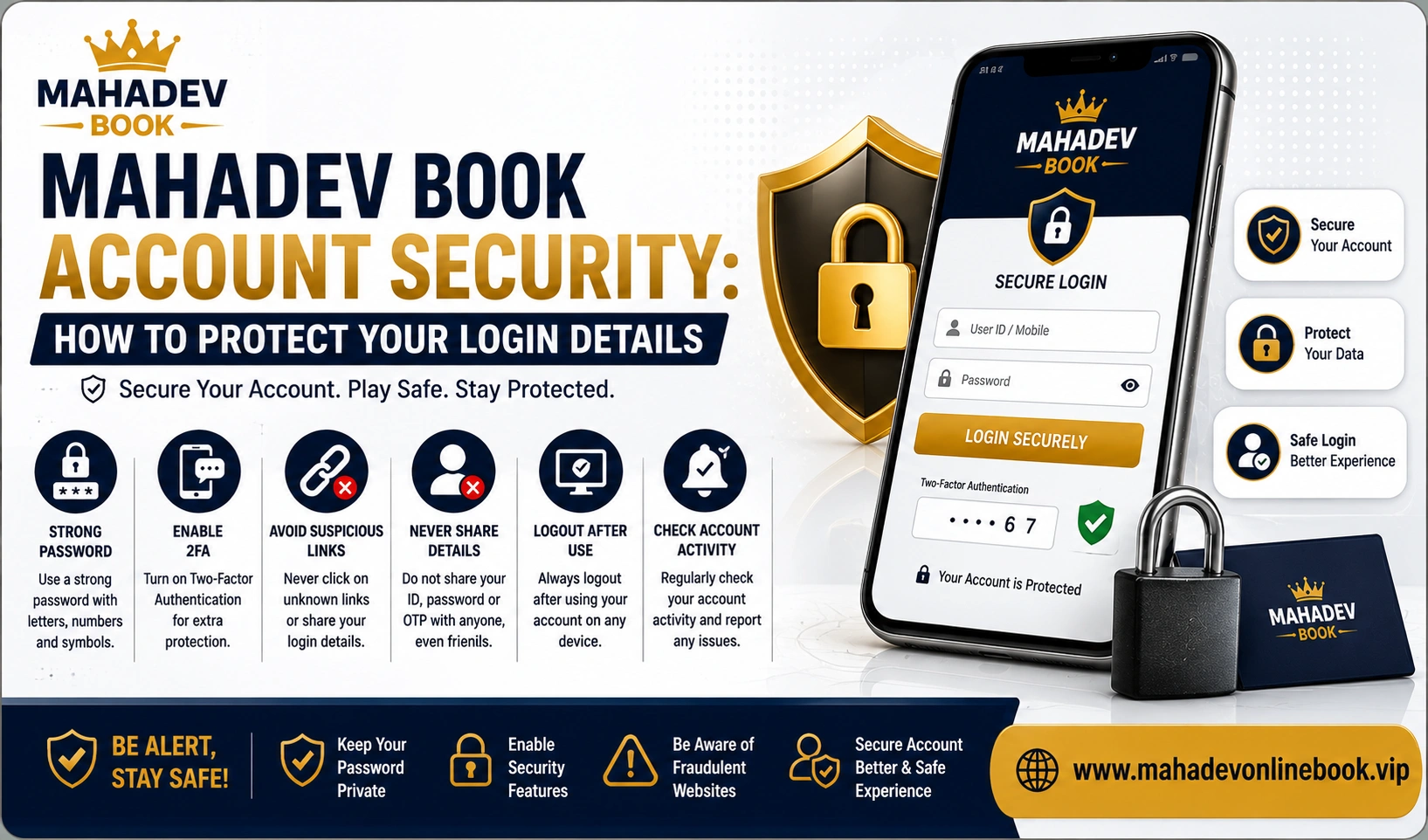
When it comes to any online site, one of the most essential features to consider is account security. A combination of a strong password, good logon practices and exercising caution with user information will help minimize the risk of unauthorized use.
Users should prioritize the security of Mahadev Book account security and ensure that their Mahadev Book ID and login credentials remain secure. This guide provides practical advice on security measures that users should take in 2026.
Why Mahadev Book Account Security Matters
Personal information, account activity and transaction-related information may be included in your online account. If the logon details are leaked, another person might be able to log on to the system.
Protecting can be done through good security practices by:
- Your Mahadev Book ID
- Login credentials
- Personal information
- Account history
- Transaction information
- Linked contact details
The security of your account should start when you register.
Use a Strong and Unique Password
One of the first lines of defense is your password.
Set a password which is:
- Long and difficult to guess
- Unique to your account
- A combination of letters, numbers, and symbols
- Not based on your name or birthday
Avoid simple passwords such as:
- 123456
- password
- your mobile number
- your name
- date of birth
Never reuse the same password across multiple websites.
Protect Your Mahadev Book ID
Mahadev Book ID is an account information and should be kept confidential.
Avoid giving access to your account to:
- Friends
- Strangers
- Social-media accounts
- Unverified agents
- Unknown customer-support accounts
You should never have to give your password or PIN to someone who is supposed to be assisting you with the issue of your account.
Be Careful During Mahadev Book Login
Always look at the website or application you are entering your credentials into to make sure it’s the right one.
When filling out a Mahadev Book login, check for:
- The correct website address
- A secure connection
- No suspicious redirects
- No unusual pop-ups
- No requests for unnecessary information
Do not log into your accounts from emails from people you don’t know.
Don't Share OTPs or Security Codes
An OTP – or verification code – can give access to an account or verify an action.
Never share:
- OTPs
- Passwords
- UPI PINs
- ATM PINs
- Banking passwords
- Card security codes
If a person requests one of these information items via WhatsApp, Telegram, phone, email or social media, consider the request suspicious.
Watch Out for Phishing
Phishing is a prevalent online security problem. A scammer can construct a fraudulent site or message that mimics a real site.
A suspicious message could say:
- Your account needs immediate verification.
- Your account will be blocked.
- You have received a special offer.
- Your withdrawal requires an additional payment.
- Your password needs to be updated.
Avoid clicking on links that are suspicious. But rather, find the official service independently and verify if the message is authentic.
Download Apps Carefully
In the case of Mahadev Book app, be sure to get software from an appropriate official or authorized source.
Avoid:
- Modified APK files
- Cracked applications
- Unknown download websites
- App that is shared with random messages
- Applications that offer special privileges and/or payouts
Check the application’s source or permissions before installing the application.
Keep Your Phone Secure
Your smartphone can contain passwords, messages, payment information, and other sensitive data.
Protect it with:
- Screen lock
- Fingerprint authentication
- Face authentication
- Updated operating system
- Security updates
- Trusted applications
Never leave an unlocked phone unattended.
Avoid Public Computers
Access to a public computer can compromise your account.
If a shared device is to be used:
- Don’t store your password.
- Be sure to not check “Remember Me.
- Log out completely.
- Remove sensitive-session data as necessary.
- Do not leave the browser window open when you have logged out.
Usually, you should use your own device for accessing your sensitive accounts.
Be Careful With Public Wi-Fi
Public Wi-Fi could be a further threat to security.
As you log in to the account:
- Prefer a trusted private network.
- Maintain the up to date of the device.
- Don’t enter sensitive information on an unknown network.
- Don’t turn off the security features of the device.
When in doubt, stay away from an unknown network for access to accounts.
Review Account Activity
Frequently monitoring account activity can alert you to abnormal transactions.
Look for:
- Unknown login activity
- Unexpected account changes
- Unfamiliar transactions
- Contact Information Updates
- Unsolicited password resets
When you notice something that doesn’t seem right, lock your account right away and reach out to the right official support.
Don't Trust Fake Customer Support
Sometimes scammers pretend to be customer-support representatives.
They can reach users via:
- Telegram
- Phone calls
They could request for your password, OTP, payment details, identity papers, etc.
If you think you are being supported, don’t share personal details with them. Test the support channel on your own.
Keep Your Email Account Secure
A possible password recovery connection may exist with your email account.
So, security of emails is also essential.
Use:
- A strong password
- Where possible two factor authentication is implemented.
- Updated recovery information
- Security alerts
If they get access to your email they can try to reset the passwords on other services.
What to Do If You Suspect Unauthorized Access
If you think that someone has logged in to your account:
Step 1: Change Your Password
Change the password immediately if you still have access.
Step 2: Secure Your Email
If you think your email password might be leaked as well, change it.
Step 3: Review Account Activity
Review recent activity in the account and transactions for anything out of the ordinary.
Step 4: Contact Official Support
Always use the trusted support system of the service.
Step 5: Protect Financial Accounts
Contact your bank or payment provider via their official means if you see an unauthorised financial transaction.
Common Account Security Mistakes
Using the Same Password Everywhere
If one website is compromised, reused passwords can put other accounts at risk.
Sharing Login Details
Never give your password to another person.
Clicking Unknown Links
A convincing-looking link can still lead to a fake login page.
Installing Unofficial Apps
Modified applications can create additional security risks.
Ignoring Security Alerts
Unexpected password-reset or login notifications should not be ignored.
A Simple Security Checklist
Before using your account, ask yourself:
- Is my password unique?
- Have I enabled available security features?
- Am I using the correct website or app?
- Have I avoided suspicious links?
- Is my phone updated?
- Have I protected my email account?
- Am I keeping OTPs and PINs private?
- Have I checked recent account activity?
If the answer is yes to all of these, you’re following several important account-security practices.
Frequently Asked Questions
How can I protect my Mahadev Book login?
Always use a strong and unique password, don’t click on any links you don’t recognize, secure your device, and never give out your password or verification codes.
Should I share my Mahadev Book ID with someone?
The details of your account should be confidential. Avoid giving out your username and passwords to someone who says they will be handling or verifying your account.
What should I do if I receive a suspicious login message?
Do not click on the link in the message. Log on to the service via its trusted channel and see what’s going on in your account.
Is it safe to install a Mahadev Book APK from an unknown website?
Do not accept APKs from unknown or modified APKs. Use official / authorized app source.
Can customer support ask for my password?
Never share with anyone your password, OTP, UPI Pin, Banking password, or Card PIN with them.
Final Thoughts
The first step to securing your Mahadev Book account is to practice some basic security measures. Choose a strong and unique password, do not give out your Mahadev Book ID, be sure to check where the Mahadev Book login is coming from before completing it and do not click on suspicious links or use unofficial applications.
Most importantly, do not share your password, OTP, UPI PIN or banking details with anyone. Checking your account regularly and maintaining up-to-date devices can add an extra layer of security.
Online security is an ongoing process. Taking a few minutes to look over account-security practices can help ensure you don’t fall victim to identity theft.